
B2B PLANNING GUIDE
Specifying Ironing Boards for Hotel Guest Rooms: A Procurement Checklist
A hotel ironing-board specification should describe the room arrangement, guest operation, housekeeping needs and service plan for the property. A star rating alone does not supply those details. Ask the operator for its actual requirements, then compare suppliers using the same product scope, representative room layout and approval process.
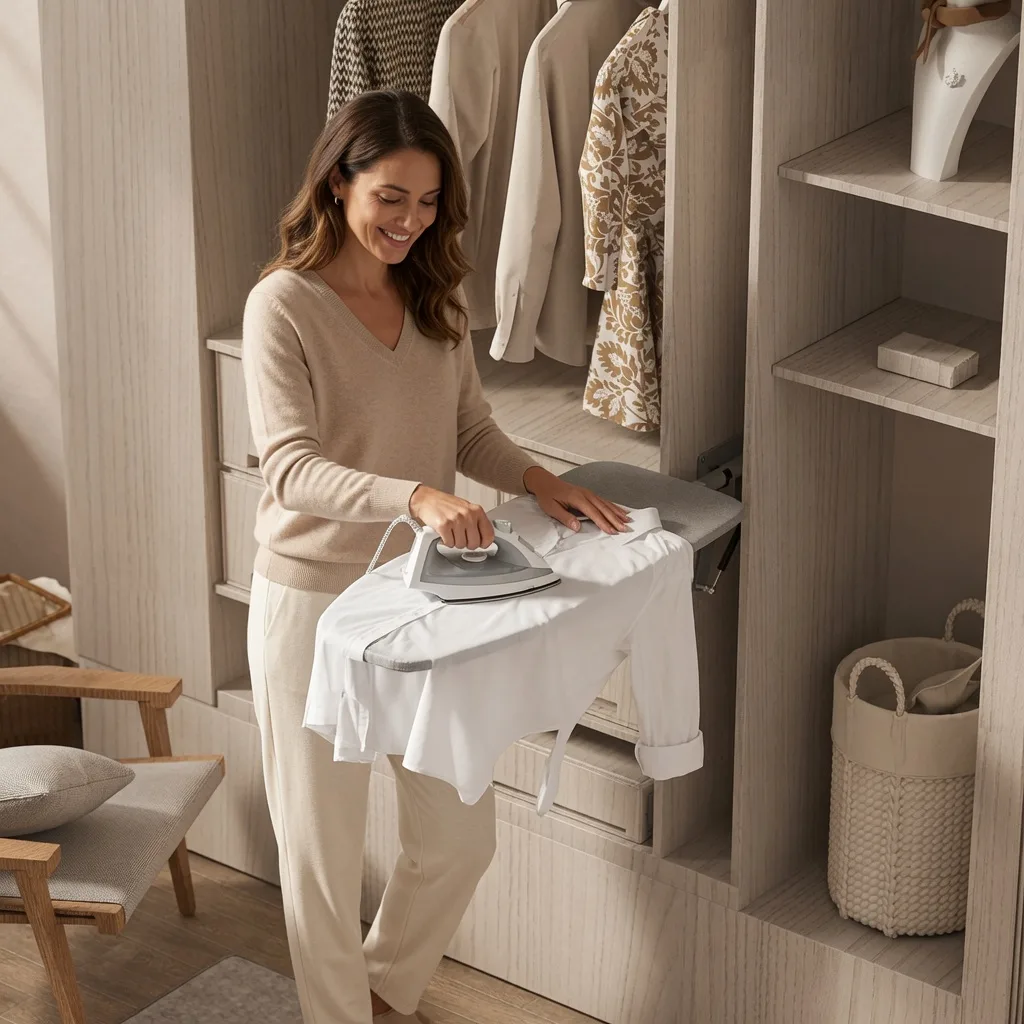
Begin with the guest-room task
Decide where the guest will find the board, how it opens and where ironing will take place. A concealed installation needs an understandable sequence as well as a storage location. Show the relationship to wardrobe doors, luggage storage and the route through the room. A board that fits inside furniture can still be inconvenient in the complete room arrangement.
Separate the ironing board from the iron and any electrical accessories in the purchasing schedule. Identify which party supplies each item and who reviews their installation and operating requirements. This avoids treating an ironing-board quotation as if it includes an entire electrical ironing station or all of the property’s equipment requirements.
Select by room type, not one photograph
Hotel projects often contain several furniture layouts. Record the room types and any differences that affect the board’s storage or working area. A successful sample in one wardrobe should not automatically approve another room with a narrower approach, reversed door swing or different furniture construction.
Compare a wall-mounted board, fold-down board or built-in cabinet arrangement using the actual plan. The appropriate choice depends on the reviewed interfaces and operating sequence. Keep the location of the ironing task visible to the interior designer, operator and contractor during selection.
| Specification area | Property input | Supplier response to request |
|---|---|---|
| Room configuration | Plans and furniture variants | Suitable available product and drawing |
| Guest operation | Intended access and storage sequence | Model operating instructions |
| Installation | Supporting construction and responsibility | Required mounting interface |
| Housekeeping | Access, inspection and care process | Cover and surface-care information |
| Maintenance | Replacement and service expectations | Available parts and removal method |
| Delivery | Room schedule and installation sequence | Packaging and identification proposal |
Do not use this schedule to imply that every hotel requires the same certification or feature. Attach the actual operator and project requirements where applicable, and ask the responsible project team to identify any missing scope. Product evidence should relate to the supplied model rather than a general description of hotel suitability.
Give housekeeping a place in sample approval
Housekeeping staff encounter the board repeatedly even when guests use it only occasionally. Invite them to review access to the cover, visibility of the stored condition and the practical return-to-storage sequence. Their observations can reveal service difficulties that a product photograph or procurement spreadsheet will not show.
Record care instructions for the cover and working surface, including any supplied restrictions. Ask how a replacement cover is identified and fitted. Do not substitute a cleaning procedure merely because it is used elsewhere in the room; obtain the relevant product information and let the property align its process with that guidance.
Define what maintenance needs to reach
Concealed hardware should be reviewed for access after the room is furnished. Ask which adjustments are possible in place and what must be removed if a component needs attention. The route for removing an assembly is a different question from whether it can be installed before the wardrobe is completed.
Build a parts record using the model, revision and replacement item descriptions. If a cover or component changes between orders, request confirmation of compatibility. A useful service plan connects the installed room type with the correct product version, so maintenance is not forced to identify equipment from an old photograph alone.
Review documentation without assuming universal requirements
The operator may provide specifications for fabric claims, equipment instructions, labeling or other matters. Request the document that defines each requirement and assign responsibility for checking the submitted evidence. A supplier statement should identify the product and scope it addresses rather than rely on a broad hotel-standard label.
Electrical-iron requirements should be reviewed separately by the parties responsible for that equipment and the project. Avoid copying certification names from unrelated catalogues into the board specification. The aim is a traceable purchasing record for the actual items being supplied, without inventing a universal rule for every four-star or five-star property.
Compare complete quotations
Ask every bidder to identify the board assembly, included mounting components, cover, packaging and documentation. Record exclusions explicitly. Two unit prices cannot be compared sensibly if one proposal includes accessories or project packaging that another leaves to the contractor.
Compare available production and delivery information against the project’s installation sequence. Ask how cartons identify room variants and whether documentation is included in the required languages. Confirm any customization, sample approval and artwork responsibilities before using the quotation as a production reference. Keep commercial values as quoted inputs rather than assumed market prices.
Use a mock-up room as the decision point
Install the selected sample in a representative approved arrangement. Have the project team review deployment, user approach, furniture conflicts, housekeeping access and service access. Record the actual installation references and resolve discrepancies with the responsible parties before approving repetition across rooms.
The mock-up record should distinguish a product issue from a room-layout or installation issue. For example, interference with a wardrobe door needs coordinated review; it does not necessarily call for a different board. Photographs and marked drawings make the discussion more precise than a general request to improve the sample.
Ask for a replacement schedule with identifiable parts
Request a list of the replaceable items actually available for the selected model. For each item, record its identification, compatible product revision and the supplier’s current commercial response. Ask which items are supplied as individual parts and which are only available as a larger assembly; do not assume a generic commitment to spare parts covers every component.
Where the property’s purchase requires a stated availability period or service arrangement, put that requirement into the commercial discussion and obtain the agreed scope in writing. Keep quoted prices and lead times tied to the response date and conditions. They are purchasing inputs, not promises that should be copied unchanged into every future refurbishment schedule.
Review cartons and room identification before delivery
Ask for carton dimensions, packed quantity, identification and any handling information needed by the contractor. Check how the proposed packaging supports the actual receiving and installation sequence. A project that installs room types in stages may need variant identification to remain visible after products are moved into storage.
If transport evidence is part of the property’s requirement, ask for the actual required scope and any relevant documentation available for the proposed package. Do not insert a generic transit-test name as if every hotel ironing-board carton must meet the same requirement. Resolve the project need and the supplied evidence together.
Keep guest-room and back-of-house requirements distinct
A guest-room installation is selected for its own users, storage and operating process. A laundry department or another staff work area may have a different task and equipment specification. Separate those schedules so a product accepted in a room mock-up is not silently extended to an unreviewed application.
Housekeeping should also distinguish loose-board handling from servicing a concealed installation. If a proposal includes portable comparison equipment, record its handling and storage requirements separately. The product format determines which observations are relevant; a leg-spread or height-adjustment question from a freestanding board should not become a mandatory feature for an unrelated wall-mounted model.
These additions make the purchasing record more useful during delivery and replacement. They preserve the service focus of the earlier hotel guide while keeping claims about operating cost, failure patterns and documentation limited to the information actually available for the project.
Before releasing the hotel order
- Room types and quantities match the product variants being ordered.
- Board, iron and accessory responsibilities are separately identified.
- The selected installation drawing matches the mock-up arrangement.
- Guest operation and return to storage have been reviewed.
- Housekeeping and maintenance observations are resolved.
- Replacement items and care information are recorded.
- Project-specific documentation and packaging are approved.
- The purchase reference includes the final sample and revision.
Send a project-ready enquiry
Use the hotel project enquiry or RFQ page to send room plans, property requirements, estimated quantities and the delivery schedule. Include any furniture variations and the scope expected from the board supplier. This allows a commercial response to address the actual project.
The cover review guide helps assess fabric information, while the OEM/ODM sourcing checklist explains approval records. A documented room-level decision is more useful than selecting equipment from a star-rating label or a generic hospitality claim.
Questions buyers ask
Does a hotel star rating define one ironing-board specification?
Do not assume it does. Obtain the operator’s and project’s actual requirements, then review the selected product, room layout and supplied documentation against that defined scope.
Should the board and electrical iron share one undivided quotation line?
Identify them separately, even when purchased together. Record who supplies each item and which operating, installation and documentation requirements apply to each part of the proposed station.
Who should participate in a hotel sample review?
Include the people responsible for the room design, installation, purchasing, housekeeping and maintenance. Each should review the parts of the operating and service sequence relevant to their work.
What makes a hotel replacement-parts record useful?
Connect each room type with the installed model and revision, replacement item identification and available care instructions. Confirm compatibility when components or covers change between orders.
Explore the product range
Discuss your project
Send drawings, application and quantity for a project review.