
Ironing Boards Since 2011
The 8 Types of Ironing Boards Explained (With a Comparison Table)
Ironing boards come in eight main types: freestanding, tabletop, over-the-door, wall-mounted fold-down, built-in recessed, cabinet, pull-out and drawer.
Ironing Board Fundamentals
Direct answer: Ironing boards come in eight main types: freestanding, tabletop, over-the-door, wall-mounted fold-down, built-in recessed, cabinet, pull-out and drawer. They differ in floor space used, board size, whether the wall or a cabinet must be modified, and whether the height can be adjusted; freestanding boards are the only fully adjustable and movable type.
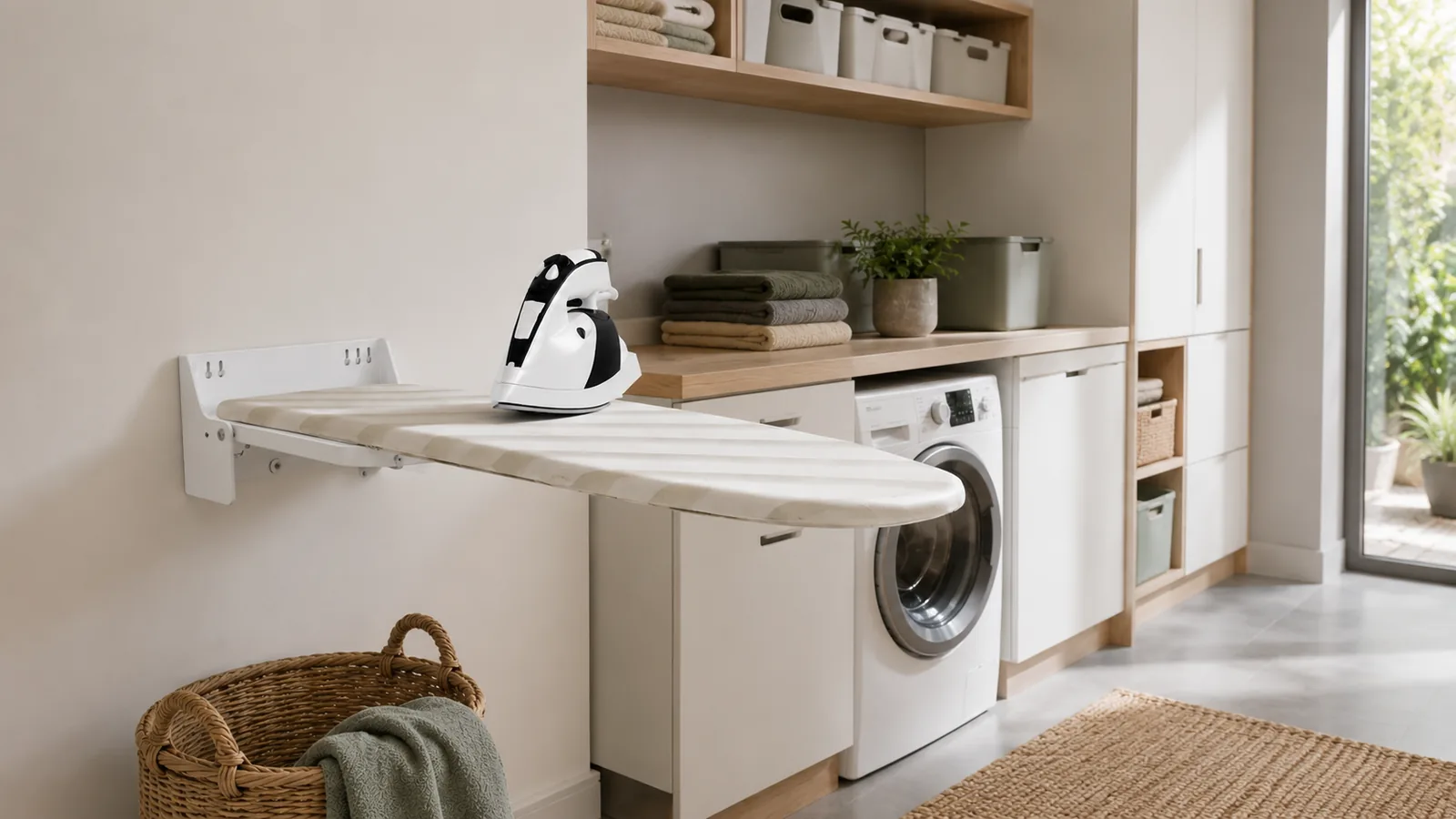
Key buyer questions
What are the different types of ironing boards?
Evaluate the question against the intended application, stored dimensions, usable surface and working clearance, and the exact model documentation. A representative sample and written approval record are the safest basis for a project decision.
Which type of ironing board takes up the least space?
Check stored dimensions, usable surface and working clearance against the current product drawing. Measure both the stored position and the full operating path, including doors, drawers, appliances, user stance, and service access.
What is the difference between a built-in and a pull-out ironing board?
Evaluate the question against the intended application, stored dimensions, usable surface and working clearance, and the exact model documentation. A representative sample and written approval record are the safest basis for a project decision.
What are the eight types of ironing boards?
Choose types of ironing boards from the room, user, and workflow—not appearance alone. Compare storage location, usable ironing surface, opening movement, fixing method, working height, iron placement, service access, and expected frequency of use.
A space-saving ironing board belongs on the shortlist only when the stored and working envelopes fit. Use the same criteria for each candidate and review the current drawing plus a representative sample before standardizing a model across rooms or sales channels.
Which types need no installation?
Installation of a space-saving ironing board starts with the wall or cabinet construction, fixing locations, stored dimensions, usable surface and working clearance, and access to each mounting point. Fastener selection must follow the actual substrate, loads, current drawing, and local practice.
Check the complete opening and rotation path before drilling or cutting. Coordinate doors, drawers, shelves, appliances, outlets, circulation, and service access; structural or electrical work should be handled by qualified people where required.
Which types fold into a wall or cabinet?
Installation of a space-saving ironing board starts with the wall or cabinet construction, fixing locations, stored dimensions, usable surface and working clearance, and access to each mounting point. Fastener selection must follow the actual substrate, loads, current drawing, and local practice.
Check the complete opening and rotation path before drilling or cutting. Coordinate doors, drawers, shelves, appliances, outlets, circulation, and service access; structural or electrical work should be handled by qualified people where required.
How do board sizes differ between types?
The fit question for types of ironing boards is decided by stored dimensions, usable surface and working clearance. Mark the reference points on a drawing, keep one primary unit system, and verify both the stored envelope and the full working envelope.
Allow for doors, drawers, shelves, appliances, the user’s stance, garment movement, the iron and cord, and access to fasteners or service parts. Typical category dimensions are useful for screening; the current model drawing controls installation.
Which type is best for each room?
Choose types of ironing boards from the room, user, and workflow—not appearance alone. Compare storage location, usable ironing surface, opening movement, fixing method, working height, iron placement, service access, and expected frequency of use.
A space-saving ironing board belongs on the shortlist only when the stored and working envelopes fit. Use the same criteria for each candidate and review the current drawing plus a representative sample before standardizing a model across rooms or sales channels.
How do you choose between two similar types?
Choose types of ironing boards from the room, user, and workflow—not appearance alone. Compare storage location, usable ironing surface, opening movement, fixing method, working height, iron placement, service access, and expected frequency of use.
A space-saving ironing board belongs on the shortlist only when the stored and working envelopes fit. Use the same criteria for each candidate and review the current drawing plus a representative sample before standardizing a model across rooms or sales channels.
What evidence should support the decision?
Connect each decision to current, model-specific evidence. Retain the application brief, revision-controlled drawing, approved sample, quotation, and purchase specification so the delivered product can be checked against the same baseline.
| Decision point | What to confirm | Evidence to retain |
|---|---|---|
| Application | Defines the correct product family | Room or cabinet brief |
| Specification | Makes offers comparable | Revision-controlled drawing |
| Sample | Tests fit, movement, and finish | Approved sample record |
| Order | Aligns quality, packaging, and delivery | Purchase specification |
How should a buyer use this information?
Use this page as a screening and briefing tool for The 8 Types of Ironing Boards Explained (With a Comparison Table). Turn the relevant points into a written requirement, compare candidates against the same baseline, and retain the drawing, sample, evidence, and approval revision that supports the decision.
What should you send with an inquiry?
- Buyer type, destination market, and intended application
- Preferred ironing board format or current model reference
- Site, wall, or cabinet dimensions with marked reference points
- Trial quantity and expected order quantity
- Finish, branding, packaging, and documentation requirements
- Requested delivery window and destination
How do ironing board types change the installation decision?
Freestanding boards need floor space in use and a tall storage position when folded. Tabletop boards reduce the storage envelope but depend on a stable supporting surface. Wall-mounted and fold-down boards move the storage decision to a wall, while built-in, drawer, and pull-out formats make the cabinet opening and deployment path part of the product specification.
For a project comparison, draw the closed and open envelope of each format at the same scale. Add the user's standing position, door and drawer swings, nearby appliances, the iron location, cord path, and access to mounting or service points. This exposes conflicts that a product photograph cannot show.
A category comparison should finish with exact-model evidence. Record the usable ironing surface, working height, stored dimensions, operating movement, fixing method, included hardware, cover construction, replacement-part route, packing state, and documentation. A representative installation remains the safest validation before a multi-unit order.
Keep the comparison tied to the intended buyer. A cabinet manufacturer needs interface dimensions and repeatable hardware; a hotel needs housekeeping and replacement planning; a distributor needs packaging, documentation, and range logic; a homeowner mainly needs fit and safe use. One format can be suitable for one workflow and poor for another.
Frequently asked questions
What is the most common ironing board size?
Check stored dimensions, usable surface and working clearance against the current product drawing. Measure both the stored position and the full operating path, including doors, drawers, appliances, user stance, and service access.
Which ironing board type is best for small apartments?
Use the exact model reference when requesting care instructions, covers, or service parts. Confirm compatible part numbers, availability, replacement method, and warranty terms in the current supplier documentation.
Are built-in ironing boards worth the installation?
Installation depends on the exact model and the wall or cabinet construction. Follow the current instructions, coordinate clearances first, and use qualified structural or electrical help where the work or local rules require it.
Can a wall-mounted board be moved later?
Installation depends on the exact model and the wall or cabinet construction. Follow the current instructions, coordinate clearances first, and use qualified structural or electrical help where the work or local rules require it.