
Ironing Boards Since 2011
Fold-Down vs Pull-Out vs Drawer: Choosing a Concealed Ironing Board
Fold-down boards hinge from a wall or cabinet and need only a fixing point and front clearance; pull-out boards ride on slides in a base cabinet and need.
Comparisons & Selection
Direct answer: Fold-down boards hinge from a wall or cabinet and need only a fixing point and front clearance; pull-out boards ride on slides in a base cabinet and need drawer depth; drawer boards fold inside a standard drawer and give the shortest board. Choose fold-down for laundry rooms and closets, pull-out for kitchen and utility runs, and drawer boards for vanities and small kitchens.
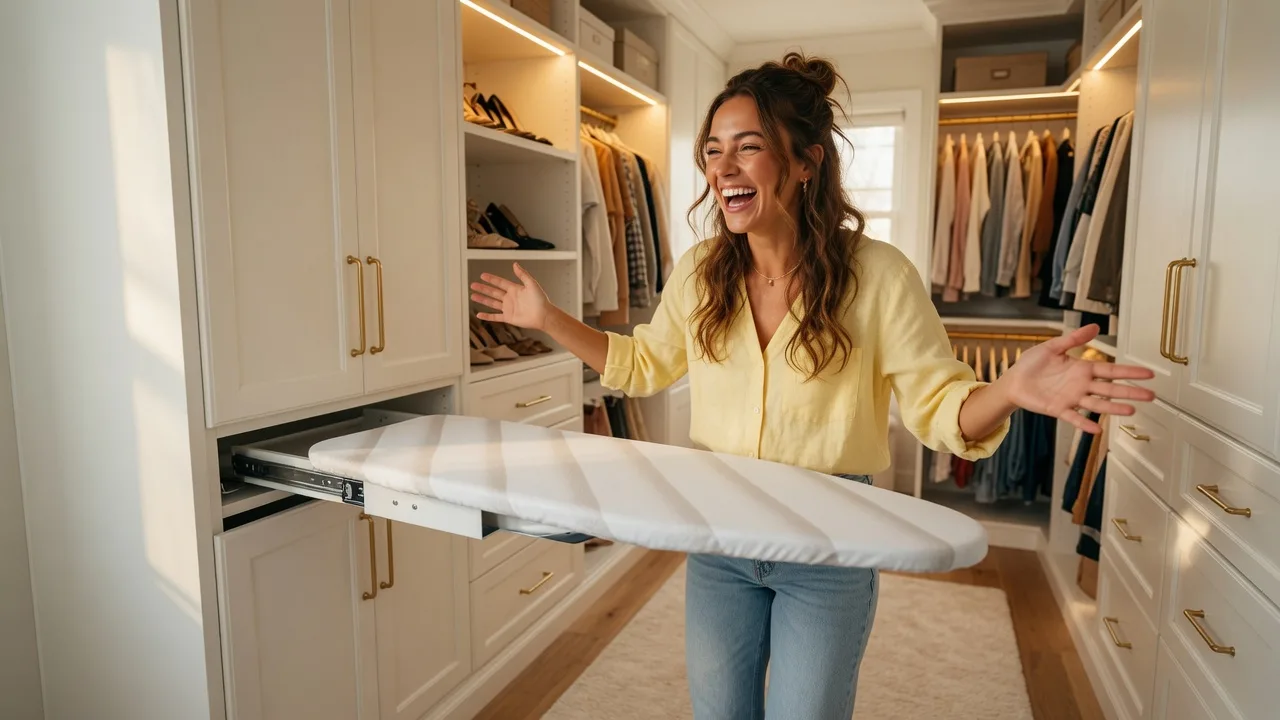
Key buyer questions
What is the difference between a fold-down and a pull-out ironing board?
Evaluate the question against the intended application, internal cabinet width, depth and height, and the exact model documentation. A representative sample and written approval record are the safest basis for a project decision.
Which hidden ironing board type is best for a kitchen?
Evaluate the question against the intended application, internal cabinet width, depth and height, and the exact model documentation. A representative sample and written approval record are the safest basis for a project decision.
Is a drawer ironing board better than a pull-out?
It may be possible, but the answer depends on the selected product, site conditions, and project specification. Verify the current drawing, instructions, and a representative sample before treating the option as approved.
How do the three concealed mechanisms work?
For fold down vs pull out ironing board, begin with the intended user, storage location, and required workflow. The category name creates a shortlist; the exact drawing, instructions, sample, evidence, and commercial assumptions decide whether the product is suitable.
Review the relevant VENACE ironing board format, then confirm site dimensions and project requirements in writing before approval.
Which gives the largest board?
Choose fold down vs pull out ironing board from the room, user, and workflow—not appearance alone. Compare storage location, usable ironing surface, opening movement, fixing method, working height, iron placement, service access, and expected frequency of use.
A cabinet-stored pull-out or drawer ironing board belongs on the shortlist only when the stored and working envelopes fit. Use the same criteria for each candidate and review the current drawing plus a representative sample before standardizing a model across rooms or sales channels.
Which needs the least building work?
Choose fold down vs pull out ironing board from the room, user, and workflow—not appearance alone. Compare storage location, usable ironing surface, opening movement, fixing method, working height, iron placement, service access, and expected frequency of use.
A cabinet-stored pull-out or drawer ironing board belongs on the shortlist only when the stored and working envelopes fit. Use the same criteria for each candidate and review the current drawing plus a representative sample before standardizing a model across rooms or sales channels.
Which suits kitchens, laundry rooms and closets?
Choose fold down vs pull out ironing board from the room, user, and workflow—not appearance alone. Compare storage location, usable ironing surface, opening movement, fixing method, working height, iron placement, service access, and expected frequency of use.
A cabinet-stored pull-out or drawer ironing board belongs on the shortlist only when the stored and working envelopes fit. Use the same criteria for each candidate and review the current drawing plus a representative sample before standardizing a model across rooms or sales channels.
How do cost and installation compare?
For fold down vs pull out ironing board, compare quotations only after the product revision is fixed. Mechanism, steel specification, finish, cover, included hardware, packaging, quantity, destination, and delivery basis can all change the result.
A decision-ready quote for Fold-Down vs Pull-Out vs Drawer: Choosing a Concealed Ironing Board should separate recurring unit cost from tooling, artwork, samples, or custom-packaging charges. MOQ, production time, payment terms, and freight remain current written-quotation fields rather than permanent website claims.
Which should you choose?
Choose fold down vs pull out ironing board from the room, user, and workflow—not appearance alone. Compare storage location, usable ironing surface, opening movement, fixing method, working height, iron placement, service access, and expected frequency of use.
A cabinet-stored pull-out or drawer ironing board belongs on the shortlist only when the stored and working envelopes fit. Use the same criteria for each candidate and review the current drawing plus a representative sample before standardizing a model across rooms or sales channels.
What evidence should support the decision?
Connect each decision to current, model-specific evidence. Retain the application brief, revision-controlled drawing, approved sample, quotation, and purchase specification so the delivered product can be checked against the same baseline.
| Decision point | What to confirm | Evidence to retain |
|---|---|---|
| Application | Defines the correct product family | Room or cabinet brief |
| Specification | Makes offers comparable | Revision-controlled drawing |
| Sample | Tests fit, movement, and finish | Approved sample record |
| Order | Aligns quality, packaging, and delivery | Purchase specification |
How should a buyer use this information?
Use this page as a screening and briefing tool for Fold-Down vs Pull-Out vs Drawer: Choosing a Concealed Ironing Board. Turn the relevant points into a written requirement, compare candidates against the same baseline, and retain the drawing, sample, evidence, and approval revision that supports the decision.
What should you send with an inquiry?
- Buyer type, destination market, and intended application
- Preferred ironing board format or current model reference
- Site, wall, or cabinet dimensions with marked reference points
- Trial quantity and expected order quantity
- Finish, branding, packaging, and documentation requirements
- Requested delivery window and destination
What should a side-by-side mechanism review include?
A fold-down board normally pivots from a wall or vertical support. A pull-out board travels from cabinetry before opening, while a drawer board is constrained by drawer-width geometry and slide or hinge movement. These descriptions are only starting points; designs within each group can rotate, telescope, fold, or lock differently.
Compare candidates using one drawing sheet that shows closed size, cabinet or wall interface, fixing locations, open projection, usable surface, working height, rotation or folding arcs, and clearance to doors and appliances. Include access for tightening fasteners and replacing covers or mechanisms.
For procurement, review the approved sample, movement cycle, stability, load evidence, finish, included hardware, packing protection, installation instructions, and service parts. Select the mechanism that fits the actual room and maintenance plan rather than the one with the shortest product description.
Frequently asked questions
Can a pull-out board swivel?
It may be possible, but the answer depends on the selected product, site conditions, and project specification. Verify the current drawing, instructions, and a representative sample before treating the option as approved.
Is a drawer board strong enough for a steam iron?
It may be possible, but the answer depends on the selected product, site conditions, and project specification. Verify the current drawing, instructions, and a representative sample before treating the option as approved.
Can a fold-down board go inside a cabinet?
Check internal cabinet width, depth and height against the current product drawing. Measure both the stored position and the full operating path, including doors, drawers, appliances, user stance, and service access.
Which is easiest to retrofit?
Check internal cabinet width, depth and height against the current product drawing. Measure both the stored position and the full operating path, including doors, drawers, appliances, user stance, and service access.