
Ironing Boards Since 2011
Extra-Wide Ironing Boards for Quilting and Sewing Rooms
Quilters and sewists need an extra-wide ironing surface, commonly 18 in (46 cm) or more across, with a firm, thin pad and a cotton cover so blocks press.
Comparisons & Selection
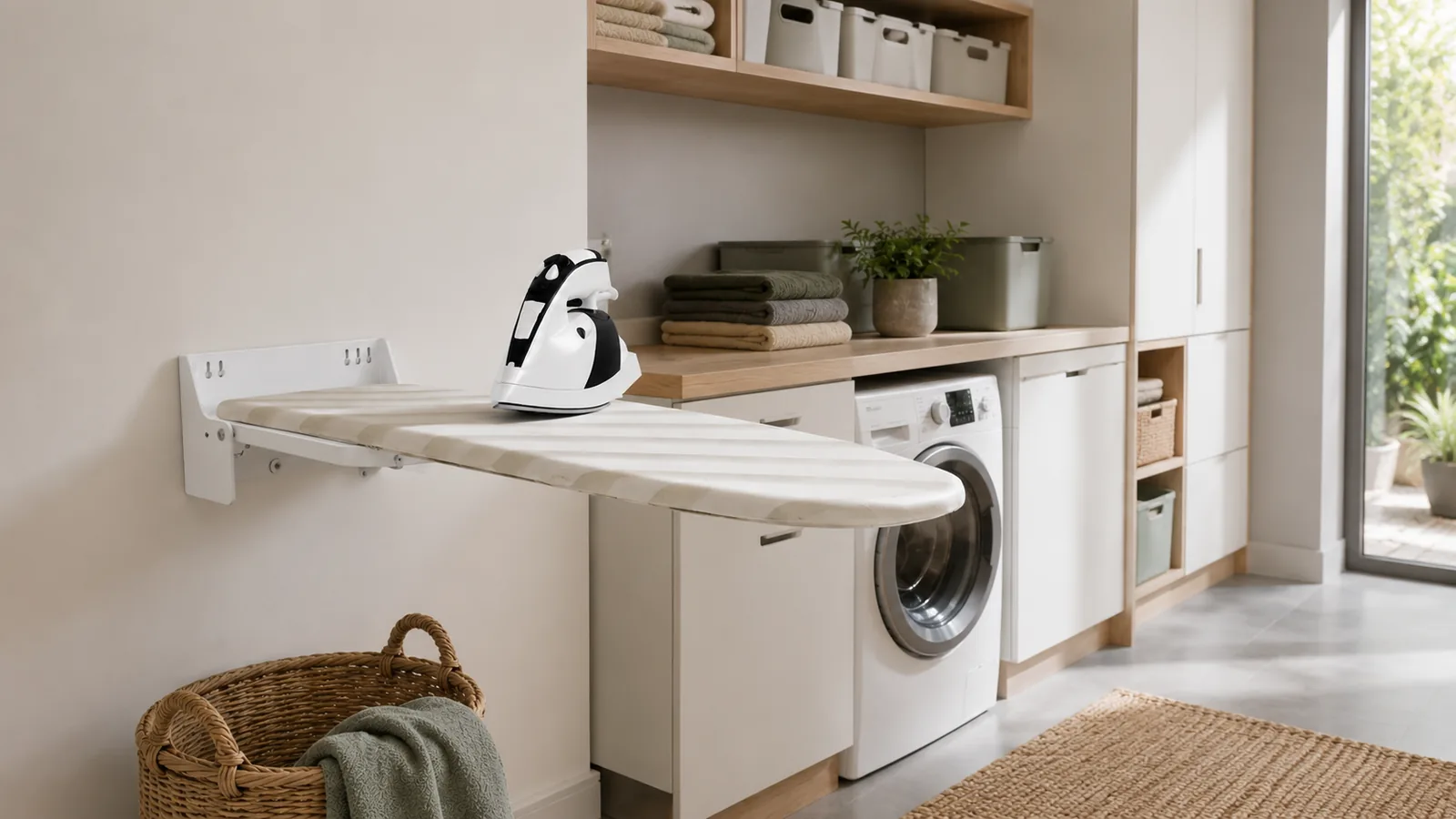
Direct answer: Quilters and sewists need an extra-wide ironing surface, commonly 18 in (46 cm) or more across, with a firm, thin pad and a cotton cover so blocks press flat without distortion; a full-length board or a wall-mounted wide board beside the cutting table keeps the pressing station at working height. Studios and shops can order custom widths through OEM programs.
Key buyer questions
What size ironing board is best for quilting?
Check stored dimensions, usable surface and working clearance against the current product drawing. Measure both the stored position and the full operating path, including doors, drawers, appliances, user stance, and service access.
Do quilters need a special ironing board?
It may be possible, but the answer depends on the selected product, site conditions, and project specification. Verify the current drawing, instructions, and a representative sample before treating the option as approved.
Can I get an extra-wide ironing board made to order?
Check stored dimensions, usable surface and working clearance against the current product drawing. Measure both the stored position and the full operating path, including doors, drawers, appliances, user stance, and service access.
Why do quilters need a wider board?
For extra wide ironing board for quilting, begin with the intended user, storage location, and required workflow. The category name creates a shortlist; the exact drawing, instructions, sample, evidence, and commercial assumptions decide whether the product is suitable.
Review the relevant VENACE ironing board format, then confirm site dimensions and project requirements in writing before approval.
How wide should a quilting board be?
For extra wide ironing board for quilting, begin with the intended user, storage location, and required workflow. The category name creates a shortlist; the exact drawing, instructions, sample, evidence, and commercial assumptions decide whether the product is suitable.
Review the relevant VENACE ironing board format, then confirm site dimensions and project requirements in writing before approval.
What pad and cover suit pressing blocks?
Choose extra wide ironing board for quilting from the room, user, and workflow—not appearance alone. Compare storage location, usable ironing surface, opening movement, fixing method, working height, iron placement, service access, and expected frequency of use.
A space-saving ironing board belongs on the shortlist only when the stored and working envelopes fit. Use the same criteria for each candidate and review the current drawing plus a representative sample before standardizing a model across rooms or sales channels.
Where should the pressing station sit in a sewing room?
For extra wide ironing board for quilting, begin with the intended user, storage location, and required workflow. The category name creates a shortlist; the exact drawing, instructions, sample, evidence, and commercial assumptions decide whether the product is suitable.
Review the relevant VENACE ironing board format, then confirm site dimensions and project requirements in writing before approval.
Are wall-mounted wide boards available?
Installation of a space-saving ironing board starts with the wall or cabinet construction, fixing locations, stored dimensions, usable surface and working clearance, and access to each mounting point. Fastener selection must follow the actual substrate, loads, current drawing, and local practice.
Check the complete opening and rotation path before drilling or cutting. Coordinate doors, drawers, shelves, appliances, outlets, circulation, and service access; structural or electrical work should be handled by qualified people where required.
How do studios order custom widths?
The fit question for extra wide ironing board for quilting is decided by stored dimensions, usable surface and working clearance. Mark the reference points on a drawing, keep one primary unit system, and verify both the stored envelope and the full working envelope.
Allow for doors, drawers, shelves, appliances, the user’s stance, garment movement, the iron and cord, and access to fasteners or service parts. Typical category dimensions are useful for screening; the current model drawing controls installation.
What evidence should support the decision?
Connect each decision to current, model-specific evidence. Retain the application brief, revision-controlled drawing, approved sample, quotation, and purchase specification so the delivered product can be checked against the same baseline.
| Decision point | What to confirm | Evidence to retain |
|---|---|---|
| Application | Defines the correct product family | Room or cabinet brief |
| Specification | Makes offers comparable | Revision-controlled drawing |
| Sample | Tests fit, movement, and finish | Approved sample record |
| Order | Aligns quality, packaging, and delivery | Purchase specification |
How should a buyer use this information?
Use this page as a screening and briefing tool for Extra-Wide Ironing Boards for Quilting and Sewing Rooms. Turn the relevant points into a written requirement, compare candidates against the same baseline, and retain the drawing, sample, evidence, and approval revision that supports the decision.
What should you send with an inquiry?
- Buyer type, destination market, and intended application
- Preferred ironing board format or current model reference
- Site, wall, or cabinet dimensions with marked reference points
- Trial quantity and expected order quantity
- Finish, branding, packaging, and documentation requirements
- Requested delivery window and destination
Frequently asked questions
Can a standard board be widened with a pressing mat?
Check stored dimensions, usable surface and working clearance against the current product drawing. Measure both the stored position and the full operating path, including doors, drawers, appliances, user stance, and service access.
Is a wool pressing mat better than a board?
It may be possible, but the answer depends on the selected product, site conditions, and project specification. Verify the current drawing, instructions, and a representative sample before treating the option as approved.
Do wide boards fit standard covers?
Check stored dimensions, usable surface and working clearance against the current product drawing. Measure both the stored position and the full operating path, including doors, drawers, appliances, user stance, and service access.
Can a wide board be built into a cutting table?
Check stored dimensions, usable surface and working clearance against the current product drawing. Measure both the stored position and the full operating path, including doors, drawers, appliances, user stance, and service access.