
Ironing Boards Since 2011
How High Should an Ironing Board Be? Ergonomic Height by User
An ironing board should sit at hip height, so your elbow bends at roughly a right angle with a slight downward reach; for most adults that is 32 to 36 in.
Ironing Board Fundamentals
Direct answer: An ironing board should sit at hip height, so your elbow bends at roughly a right angle with a slight downward reach; for most adults that is 32 to 36 in (81 to 91 cm) standing and 27 to 29 in (69 to 74 cm) seated. Freestanding boards adjust across about 28 to 38 in (71 to 97 cm), which covers most users.
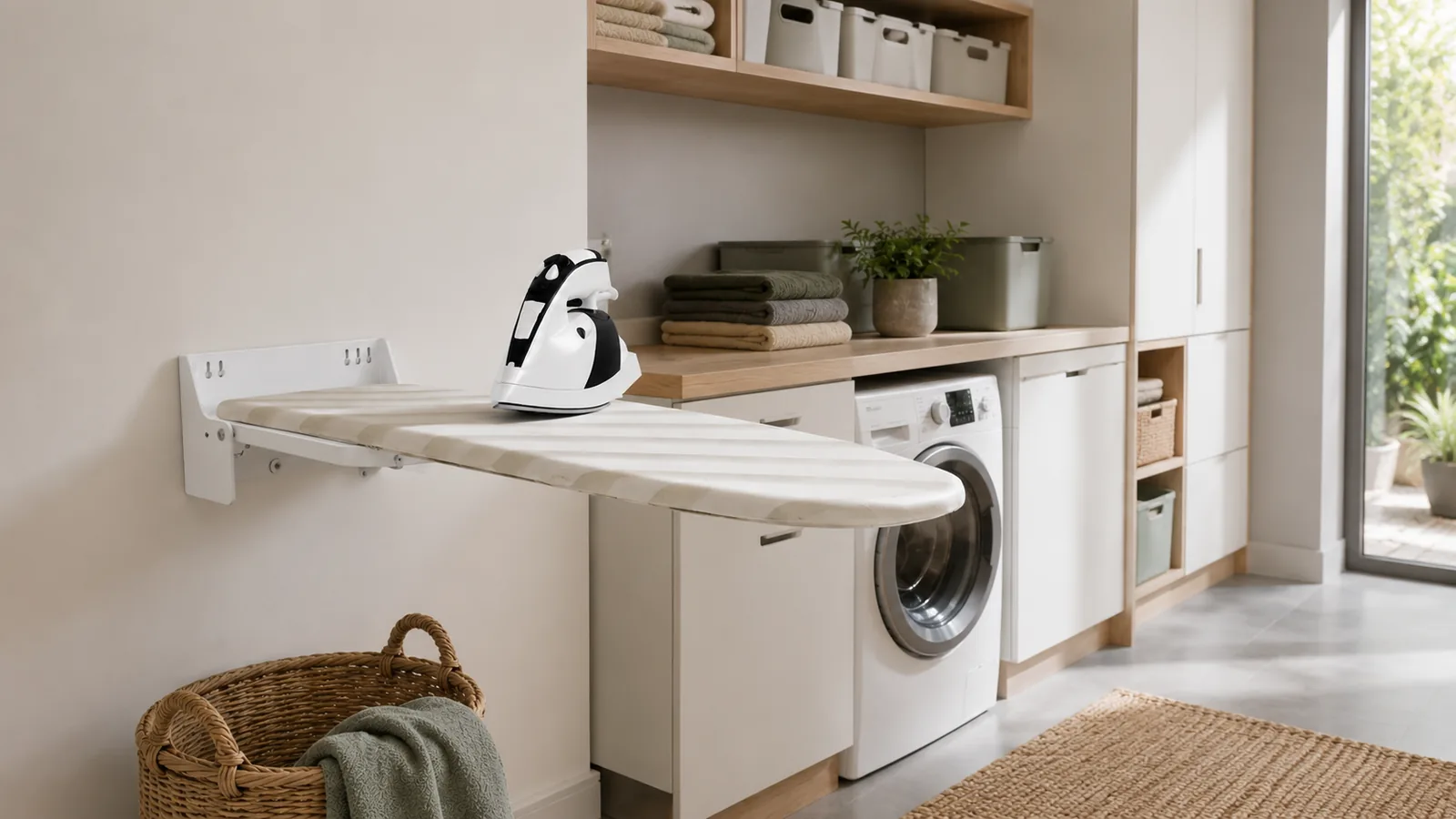
Key buyer questions
What height should an ironing board be set to?
Check stored dimensions, usable surface and working clearance against the current product drawing. Measure both the stored position and the full operating path, including doors, drawers, appliances, user stance, and service access.
How do I know if my ironing board is at the right height?
Check stored dimensions, usable surface and working clearance against the current product drawing. Measure both the stored position and the full operating path, including doors, drawers, appliances, user stance, and service access.
What is the ergonomic height for ironing while seated?
Check stored dimensions, usable surface and working clearance against the current product drawing. Measure both the stored position and the full operating path, including doors, drawers, appliances, user stance, and service access.
What is the correct ironing board height?
The fit question for how high should an ironing board be is decided by stored dimensions, usable surface and working clearance. Mark the reference points on a drawing, keep one primary unit system, and verify both the stored envelope and the full working envelope.
Allow for doors, drawers, shelves, appliances, the user’s stance, garment movement, the iron and cord, and access to fasteners or service parts. Typical category dimensions are useful for screening; the current model drawing controls installation.
How do you find your own height with the wrist test?
Evaluate how high should an ironing board be through a traceable chain: approved drawing, representative sample, incoming-material checks, in-process functional checks, final inspection, and packing verification. The record should identify the model, batch, revision, sample size, method, and result.
For a space-saving ironing board, inspect stable deployment, locking or retention where specified, movement, flatness, finish, fasteners, cover condition, and included parts. A test load is not automatically the same as a supplier-rated working load; request the exact-model evidence.
How high should the board be for seated ironing?
Safety for how high should an ironing board be depends on stable support, controlled movement, secure storage, a clear hot-iron position, correct installation, and instructions suited to the intended user. Review normal use, foreseeable misuse, cleaning, and service.
Do not infer a load rating, accessibility claim, or child-safety claim from appearance. Confirm the exact model’s instructions and evidence, and involve a qualified installer or occupational specialist when the site or user has additional needs.
What height range do adjustable boards cover?
The fit question for how high should an ironing board be is decided by stored dimensions, usable surface and working clearance. Mark the reference points on a drawing, keep one primary unit system, and verify both the stored envelope and the full working envelope.
Allow for doors, drawers, shelves, appliances, the user’s stance, garment movement, the iron and cord, and access to fasteners or service parts. Typical category dimensions are useful for screening; the current model drawing controls installation.
What happens when the board is too low or too high?
For how high should an ironing board be, begin with the intended user, storage location, and required workflow. The category name creates a shortlist; the exact drawing, instructions, sample, evidence, and commercial assumptions decide whether the product is suitable.
Review the relevant VENACE ironing board format, then confirm site dimensions and project requirements in writing before approval.
How do you set height for two people sharing a board?
The fit question for how high should an ironing board be is decided by stored dimensions, usable surface and working clearance. Mark the reference points on a drawing, keep one primary unit system, and verify both the stored envelope and the full working envelope.
Allow for doors, drawers, shelves, appliances, the user’s stance, garment movement, the iron and cord, and access to fasteners or service parts. Typical category dimensions are useful for screening; the current model drawing controls installation.
What evidence should support the decision?
Connect each decision to current, model-specific evidence. Retain the application brief, revision-controlled drawing, approved sample, quotation, and purchase specification so the delivered product can be checked against the same baseline.
| Decision point | What to confirm | Evidence to retain |
|---|---|---|
| Application | Defines the correct product family | Room or cabinet brief |
| Specification | Makes offers comparable | Revision-controlled drawing |
| Sample | Tests fit, movement, and finish | Approved sample record |
| Order | Aligns quality, packaging, and delivery | Purchase specification |
How should a buyer use this information?
Use this page as a screening and briefing tool for How High Should an Ironing Board Be? Ergonomic Height by User. Turn the relevant points into a written requirement, compare candidates against the same baseline, and retain the drawing, sample, evidence, and approval revision that supports the decision.
What should you send with an inquiry?
- Buyer type, destination market, and intended application
- Preferred ironing board format or current model reference
- Site, wall, or cabinet dimensions with marked reference points
- Trial quantity and expected order quantity
- Finish, branding, packaging, and documentation requirements
- Requested delivery window and destination
Frequently asked questions
Is there a standard ironing board height?
Check stored dimensions, usable surface and working clearance against the current product drawing. Measure both the stored position and the full operating path, including doors, drawers, appliances, user stance, and service access.
Why do my shoulders hurt after ironing?
Evaluate the question against the intended application, stored dimensions, usable surface and working clearance, and the exact model documentation. A representative sample and written approval record are the safest basis for a project decision.
Can a tall person use a standard ironing board?
Requirements depend on the destination market, product configuration, and claims made. Confirm current obligations with the relevant authority or a qualified adviser, and match every certificate or report to the exact model and revision.
How do wall-mounted boards handle height?
Check stored dimensions, usable surface and working clearance against the current product drawing. Measure both the stored position and the full operating path, including doors, drawers, appliances, user stance, and service access.